BIOGRAPHY
Camille Virot is a French ceramist born on 1 July 1947 in Calmoutier, Franche-Comté.
He studied ceramics at the École des Beaux-Arts in Besançon, then at the École des Arts Décoratifs in Strasbourg. Camille Virot began his artistic training in the architecture studio at the École des Beaux-Arts in Besançon before turning to ceramics in 1968. Throughout his career, Camille Virot has established himself as a renowned contemporary artist in the field of ceramics. His work is inspired by nature, particularly mountains and the mineral harshness of the environment. His ceramic creations express his deep relationship with the natural world. Camille Virot's work has been exhibited in prestigious institutions, notably the Musée des Beaux-Arts in Lyon. His reputation extends beyond French borders, with his creations being displayed and sold in international galleries.
The main technique used by Camille Virot in her creations is raku, a Japanese method of firing ceramics. Camille Virot has adopted this traditional technique, which dates back to 16th-century Japan and is closely linked to the tea ceremony.
The raku practised by Camille Virot is distinguished by several aspects:
He uses it as a basis for developing a personal artistic expression.
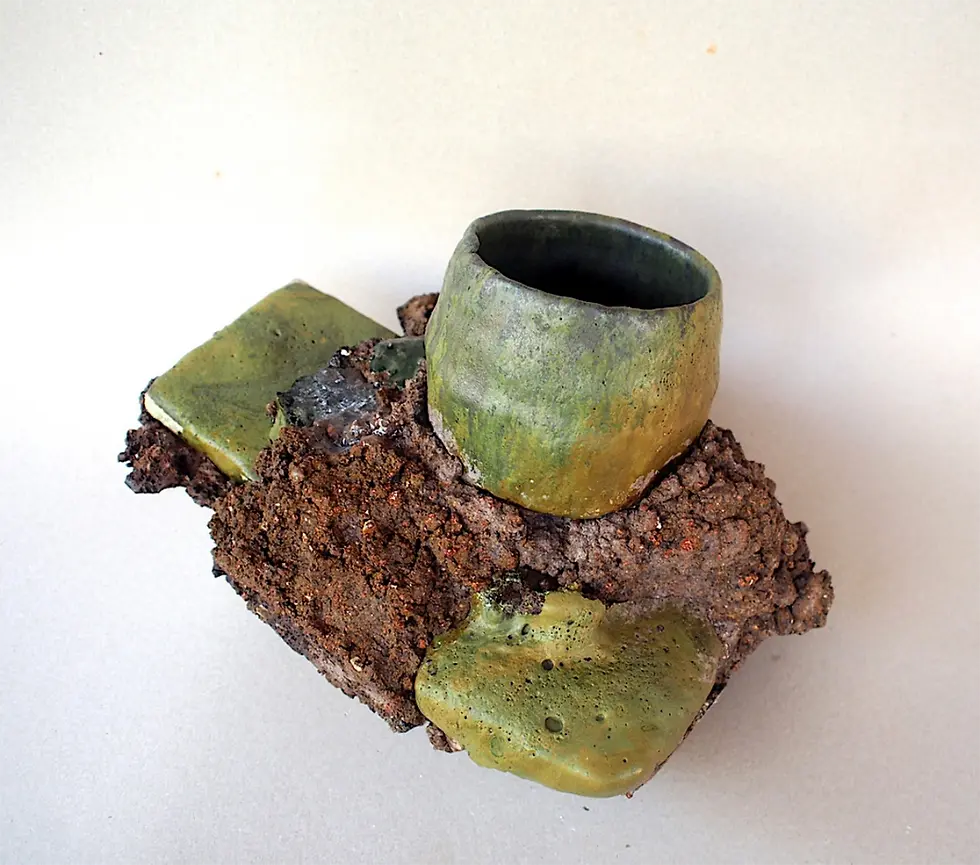
Virot sometimes incorporates other materials such as concrete, glass fragments or pottery shards into his raku works.
This technique allows him to express his relationship with nature and his commitment to the environment.
Although raku is his technique of choice, it is important to note that since 1990, Camille Virot has also been combining other materials with clay in his creations, thus broadening his technical repertoire while remaining faithful to his roots in raku.
He has also published important works on contemporary ceramics, including ‘L'atelier Camille Virot’ and ‘Huit artistes et la Terre’, considered one of the major writings on ceramic art.
Camille Virot explores several main themes in his ceramic works:
The relationship with nature:
His creations are deeply influenced by his environment, particularly the mountains and the mineral harshness that surround him.
The expressiveness of the material:
Camille Virot seeks to highlight the basic materials used, aiming for an ‘expressiveness of the earth without artifice or brilliance’ in order to rediscover the humility of popular pottery.
The human and sensory dimension:
He creates works, particularly bowls, that are rooted in a tactile and intimate dimension. Camille Virot uses a sensual vocabulary to describe his creations, referring to the body, lips and feet, making them truly ‘ceramics of the senses’.
The exploration of traditional forms:
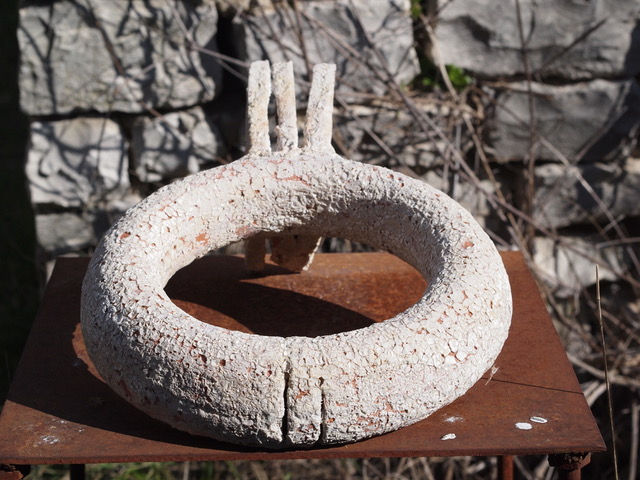
Camille Virot works on classic ceramic forms such as urns, jugs, bowls, salt cellars, bricks, tiles and boxes, but forgets their practical function to focus on their essence and physical nature.
The meeting of tradition and innovation:
While drawing inspiration from the traditional Japanese raku technique, Camille Virot constantly seeks to renew her artistic expression, sometimes combining other materials with clay since 1990.
These themes reflect Camille Virot's approach, which combines respect for ceramic traditions with the search for a contemporary and personal artistic expression.
Camille Virot seeks to highlight the basic materials used, aiming for an ‘expressiveness of the earth without artifice or brilliance’ in order to rediscover the humility of popular pottery. Her creations are deeply influenced by her environment, particularly the mountains and the mineral harshness that surround her. Her pieces may have smooth or rough surfaces, sometimes with lime applied to the glaze before firing.
Camille Virot's works are often described as rough, earthy and rooted.