BIOGRAPHY
Jean-François Auber
Born in Nantes in 1960. École Supérieure des Arts Modernes in Paris.
Lives and works in the south of France.
My professional activities have always been in the graphic arts,
as a graphic designer, illustrator, painter and sculptor.
Having worked for many years in printing, I inevitably became familiar with
paper,
so I was able to rummage through reams and reels, and paper became
my favourite material.
After various experiments with transformation,
I personally discovered this technique, which I have been practising since 2014.
Today, I am refining my artistic research by developing my
process with conviction and passion.
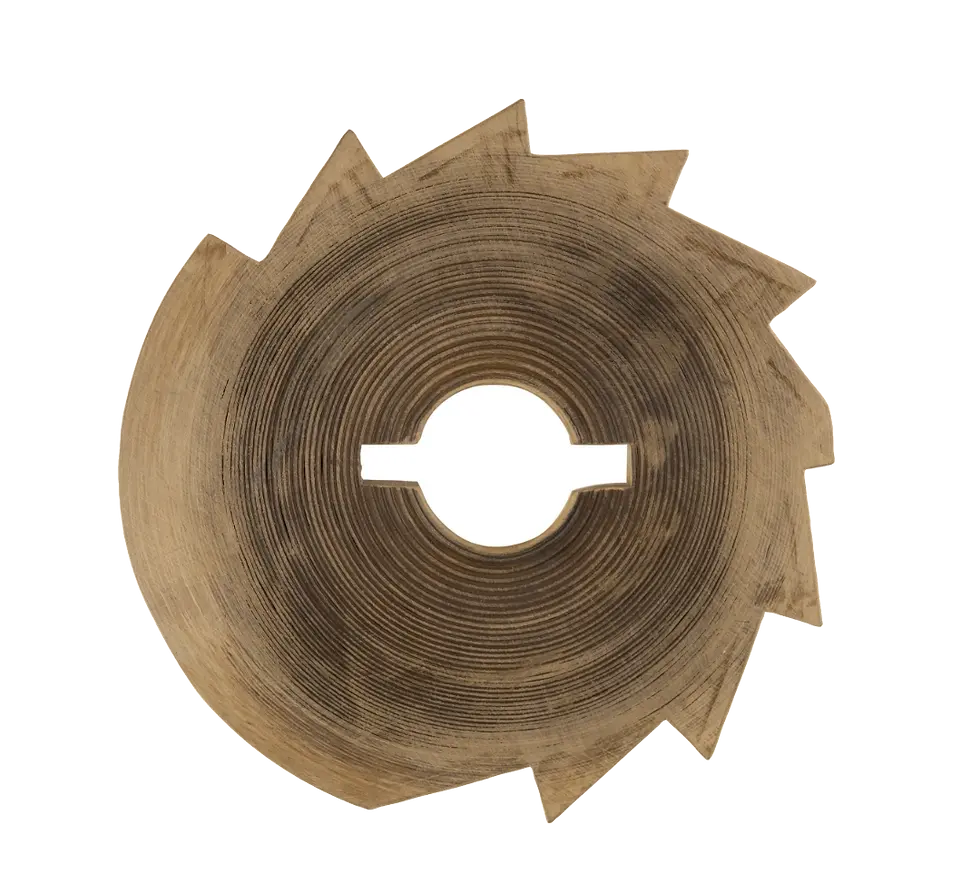
My work as a visual artist consists of lignifying and transforming paper.
I use kraft paper from the pine trees of the Landes region to recreate wood through various processes.
When subjected to pressure and heat, the plant fibre becomes denser: once
planed and reworked, the paper regains the original appearance of wood.
By giving back to nature what it has given us, the life cycle of wood is reversed: wood is born from paper.
Lignification: definition and explanations
Trees without lignin to make paper without polluting
Lignification and wood formation in trees...
The paper lignification technique used by Jean-François Auber consists of transforming paper, a flexible and fragile material, into a solid and resistant material similar to wood. In concrete terms, this involves treating and shaping the paper to give it a lignified texture and appearance, i.e. similar to that of wood, both visually and tactilely.
Auber uses layering, collage, impregnation and specific treatments to stiffen the paper and alter its original appearance, giving it a new materiality. This transformation allows him to explore the boundary between the fragility of paper and the robustness of wood, creating sculptures in which the material seems to have undergone a metamorphosis and the viewer's perception of the true nature of the work is challenged.
The “lignification” of paper, in this artistic context, does not refer to a chemical process identical to that of lignin formation in natural wood, but to a plastic approach aimed at giving paper the physical and aesthetic qualities of wood through techniques of manipulation, treatment and hardening.