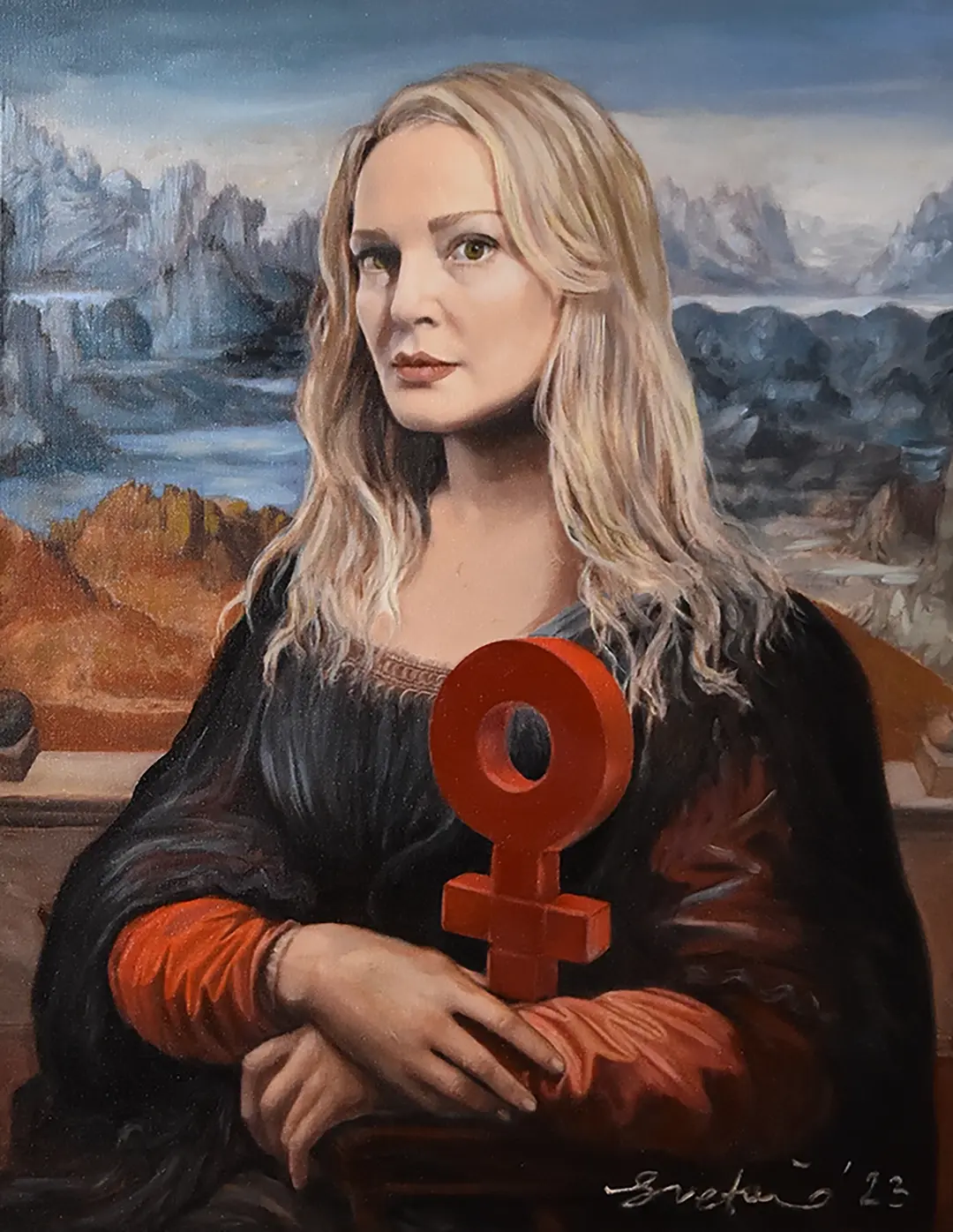

Mona Nissa by Svetà MARLIER - Digigraphy
€400.00Price
Digigraphy is the new quality standard that replaces lithography with an entirely digital process. Digigraphy® is renowned for its colour rendering qualities and durability. This quality label is used by museums and leading contemporary artists.
digigraphy print.
The Digigraphy process Digitisation
- The original work (oil painting or watercolour) is scanned in very high definition in a specialised laboratory.
- Contactless scanning tables are used.
- The work is carried out by professionals in the presence of the artist.
- A digital file is obtained for further processing.
Colour correction or "Chromie"
- The artist reworks the digital file using editing software.
- White balance, colour balance, light and contrast levels are adjusted.
- The aim is to achieve the best possible colour match with the original.
Test phases
- The file is sent to a certified Digigraphy laboratory.
- Test strips are printed on the chosen medium (often a specially primed canvas).
- The artist checks the print by comparing it directly with the original work.
- Several adjustments and tests are usually necessary.
Artist proofs
- Three artist's proofs (EA1, EA2, EA3) are printed as special editions.
- These tests allow for final adjustments to be made.
- They are either kept by the artist or sold as "special editions".
The final impression
- The first prints are produced by the laboratory.
- Each print is signed and numbered by hand by the artist.
- A certificate of authenticity accompanies each reproduction.
- The print has two signatures: that of the original work (printed) and that of the print (handwritten).